History and trivia
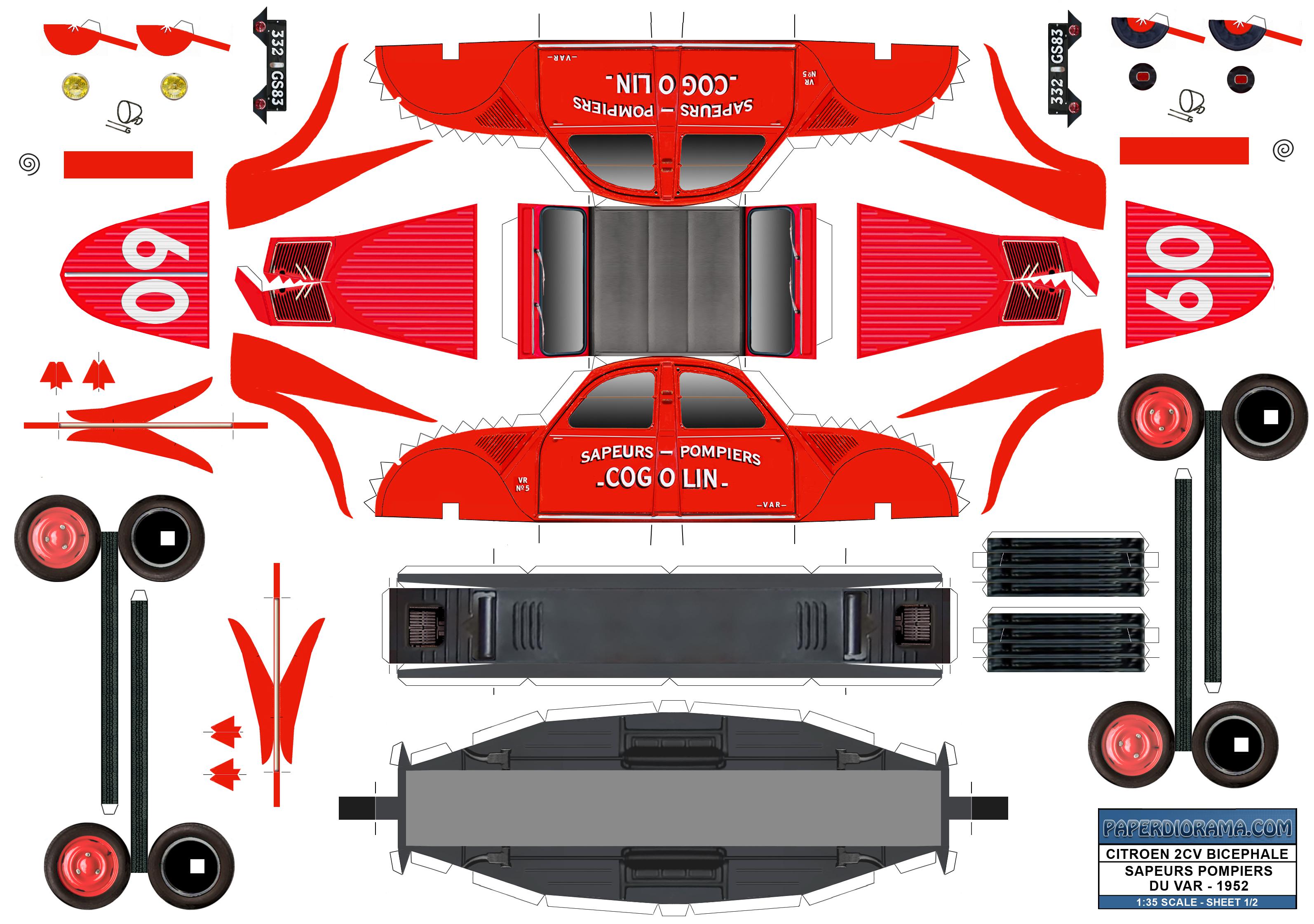
The Citroën 2CV debuted at the 1948 Paris Motor Show, after years of development disrupted by World War II, which forced Citroën to hide the early prototypes so they wouldn't be seized. Conceived to put rural France on wheels, it had to meet a very specific brief from Citroën: carry four people and a bulky load at a modest speed over unpaved roads, all on minimal fuel. Its air-cooled flat-twin engine, long-travel suspension, and overall lightness combined to produce a car that was extremely simple yet remarkably effective at its job.
The 2CV stayed in production for more than four decades, until 1990, with only minimal styling and mechanical changes, making it a symbol of continuity and simplicity against a backdrop of constant change elsewhere in the industry. Millions of units were built across plants in Europe, Africa, and the Americas, and the model spawned numerous variants, from vans like the AZU to open-top safari versions with removable roofs. Today it remains one of the most recognizable icons of French motoring and a regular sight at classic car gatherings across Europe.